

 01
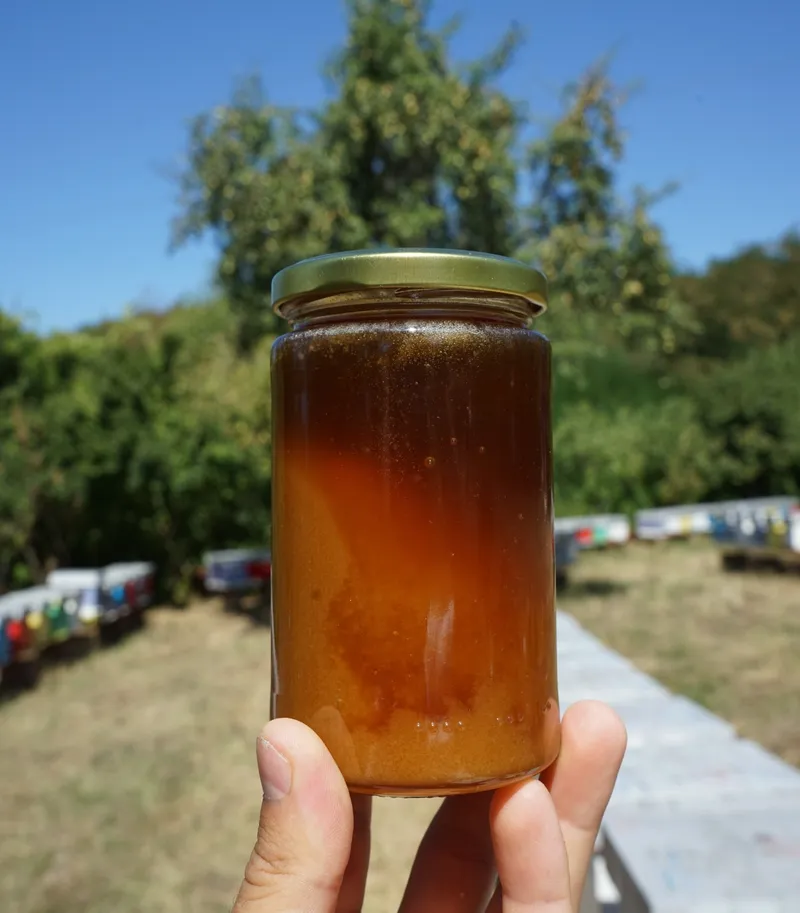
01Why honey crystallises, and why that is good news
Crystallisation is a property of real honey rather than spoilage. Why acacia stays clear for a year, while Vlasina and forest honey both set in three to six months.
ReadFrom the apiary
The questions we get asked most, answered once and properly.
01Crystallisation is a property of real honey rather than spoilage. Why acacia stays clear for a year, while Vlasina and forest honey both set in three to six months.
Read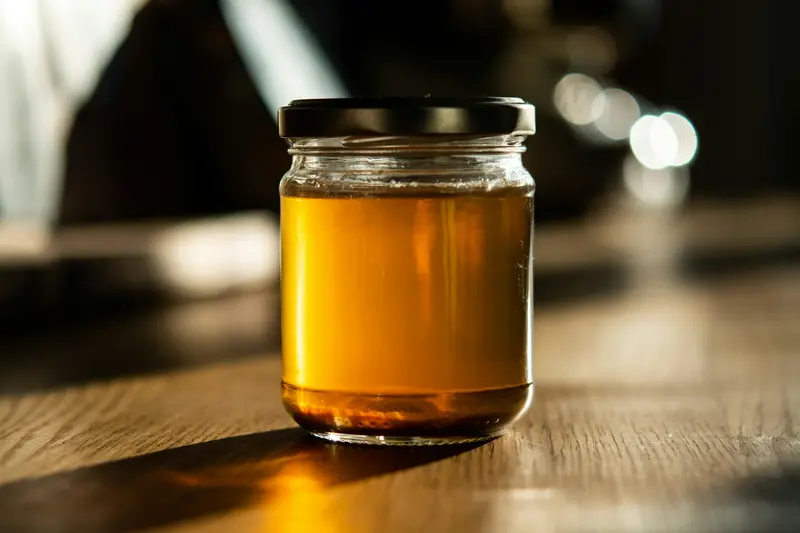 02
02A closed jar, room temperature, out of the sun and always a dry spoon. Why the fridge is not the answer and why honey in a closed jar keeps for years.
Read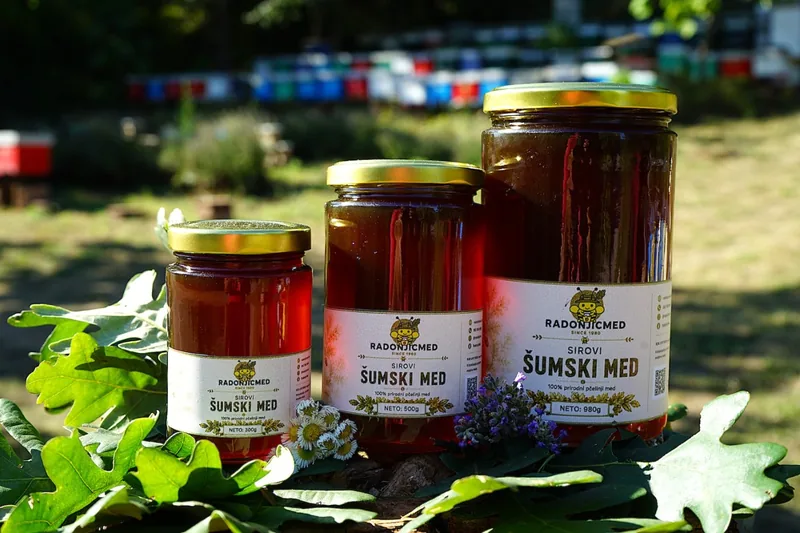 03
03Forest honey is made from honeydew on oak, maple and hornbeam rather than nectar. Why it is darker and less sweet, why it crystallises within three to six months, and why it is not there every year.
Read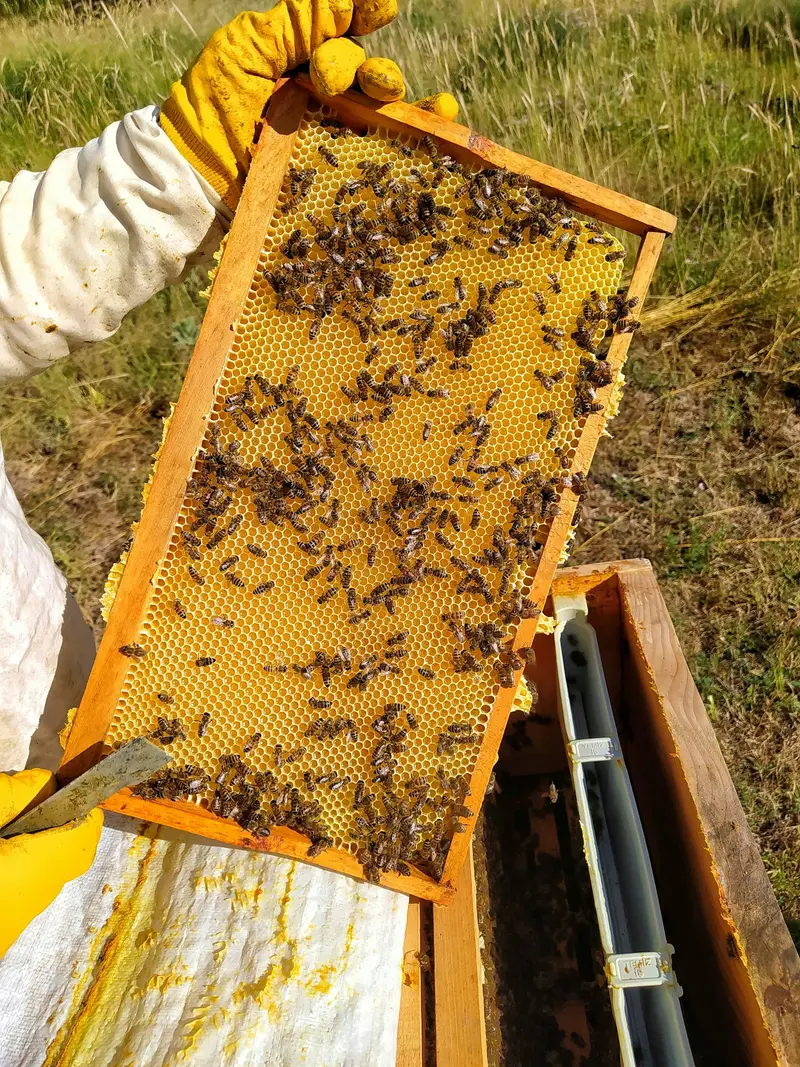 04
04Warmed honey looks better on a shelf and pours into jars more easily. Why we do not cross that ceiling at any step, and what it means for a jar that arrives already set.
Read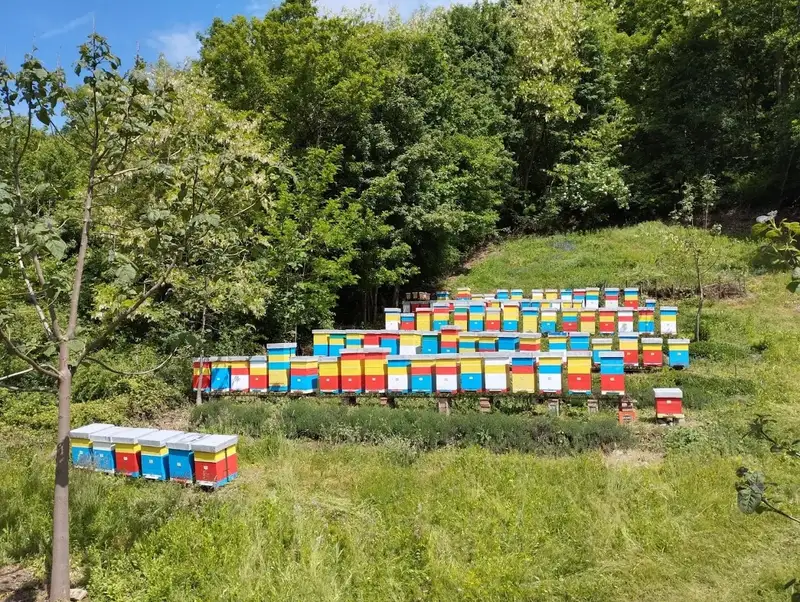 05
05Acacia flowers for ten days. Moving the hives from 270 to 500 metres starts the same flow over, because higher up the blossom runs about a fortnight late.
Read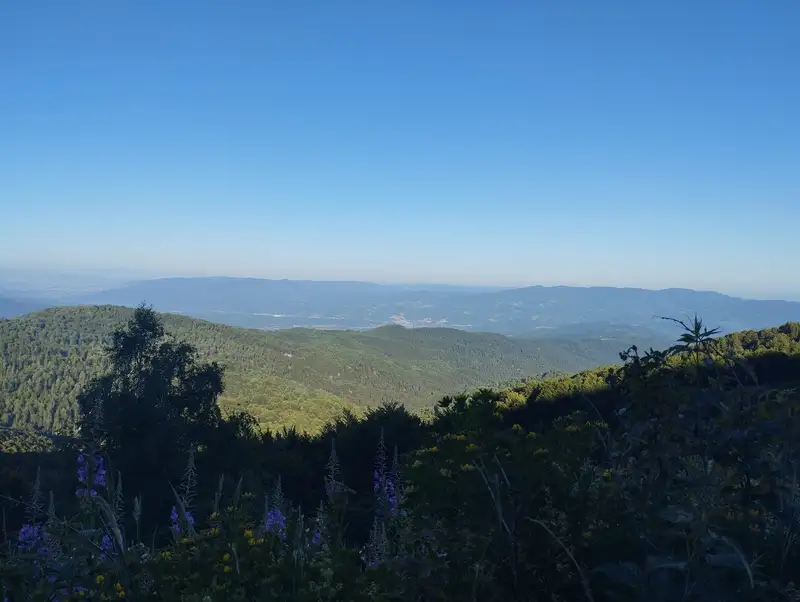 06
06Mountain honey is not a marketing word but the result of a shorter season, colder nights and a different flow. What changes at 1,200 metres and why the same hive yields less there.
Read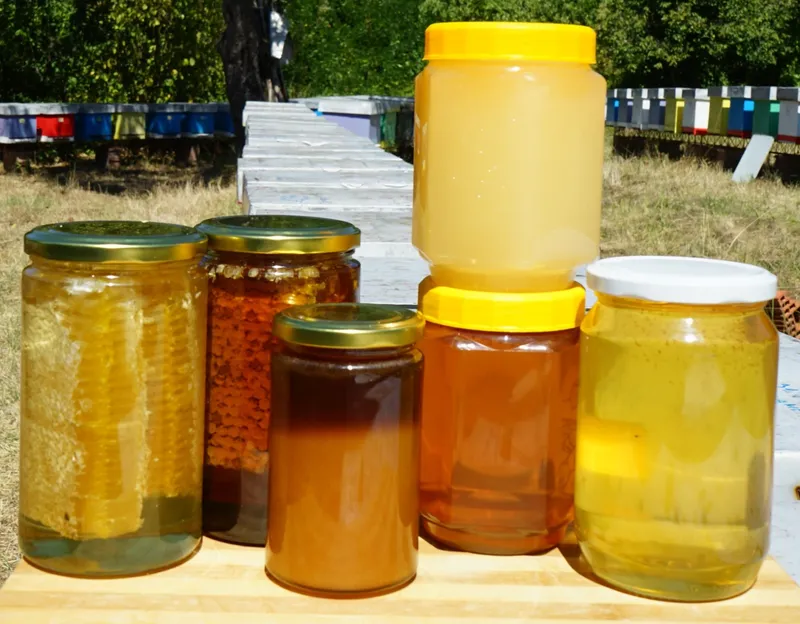 07
07Acacia for tea and for children who dislike strong flavours, Vlasina for a spoonful in the morning and for marinades, forest honey with mature cheese. A short guide to the three varieties.
Read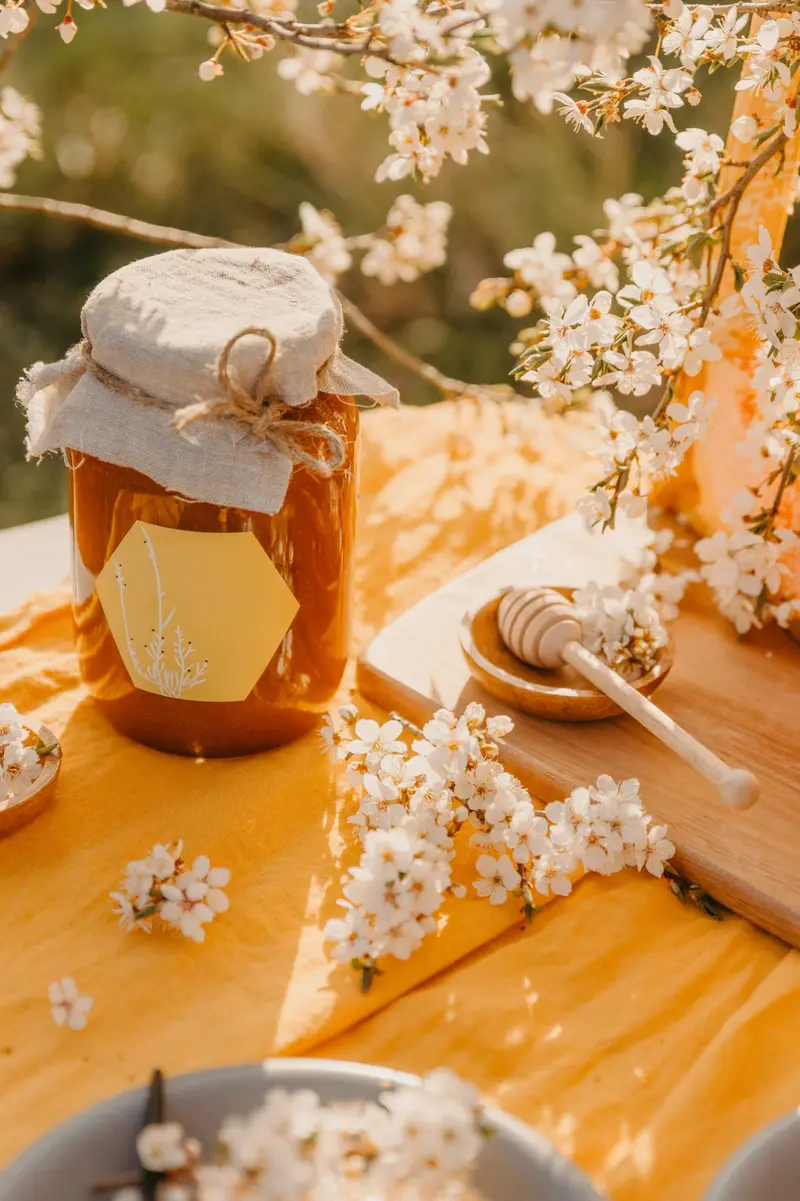 08
08One to three things of your choosing, each in 300, 500 or 980 g, sent straight to the recipient with no price in the parcel. How to choose and what to say when you order.
Read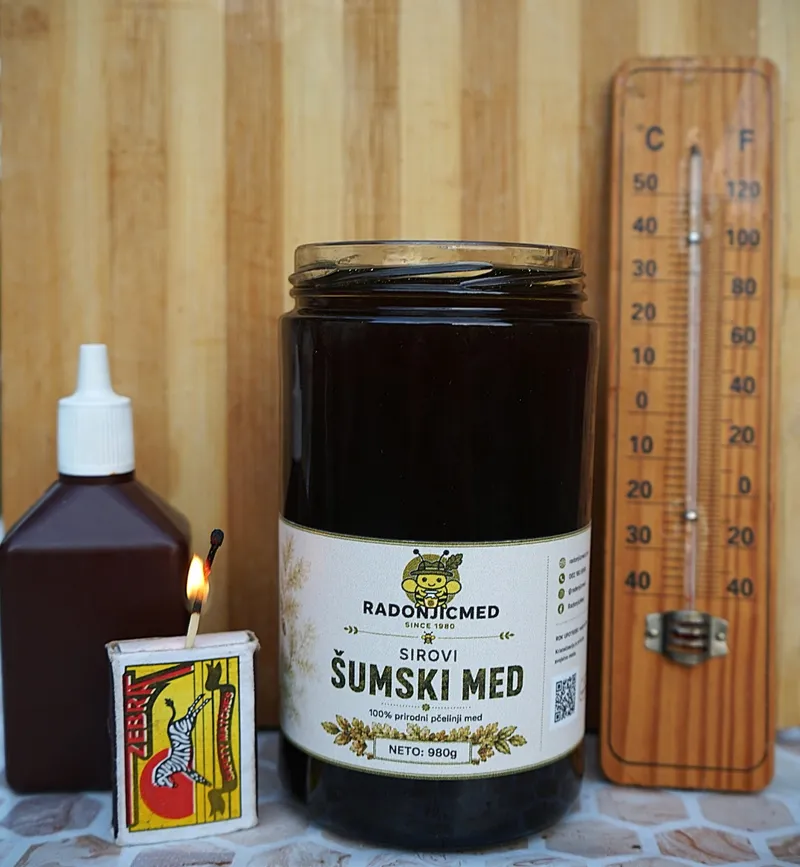 09
09The water test, the thumb test, the match and the iodine drop have circulated for years and none of them shows whether honey is real. What does tell you something, what belongs on the label, and why the answer sits with the producer.
Read 10
10Honey does not spoil, because there is too little water in it for anything to grow. The date on the jar is a labelling rule, and the only things that shorten honey's life are moisture and heat.
Read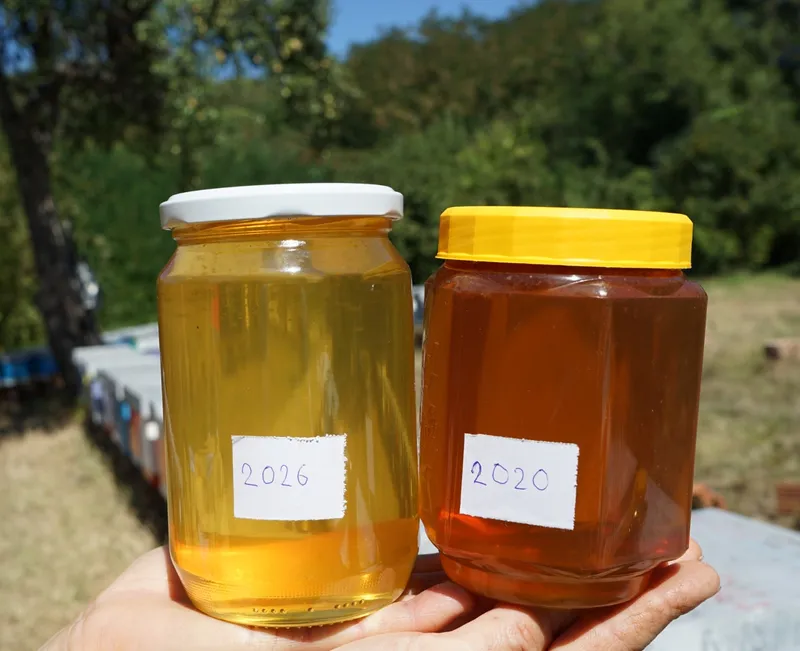 11
11Honey darkens slowly in storage because sugars react with amino acids. Heat and sunlight speed it up, and the colour on its own says nothing about honey having gone off.
Read