

The variety few people know
This honey does not come from a blossom.
Most people know honey made from flower nectar. Honeydew honey is made differently - on oak and maple around Svođe - and it is the one honey of ours we cannot know in advance whether there will be any next season.
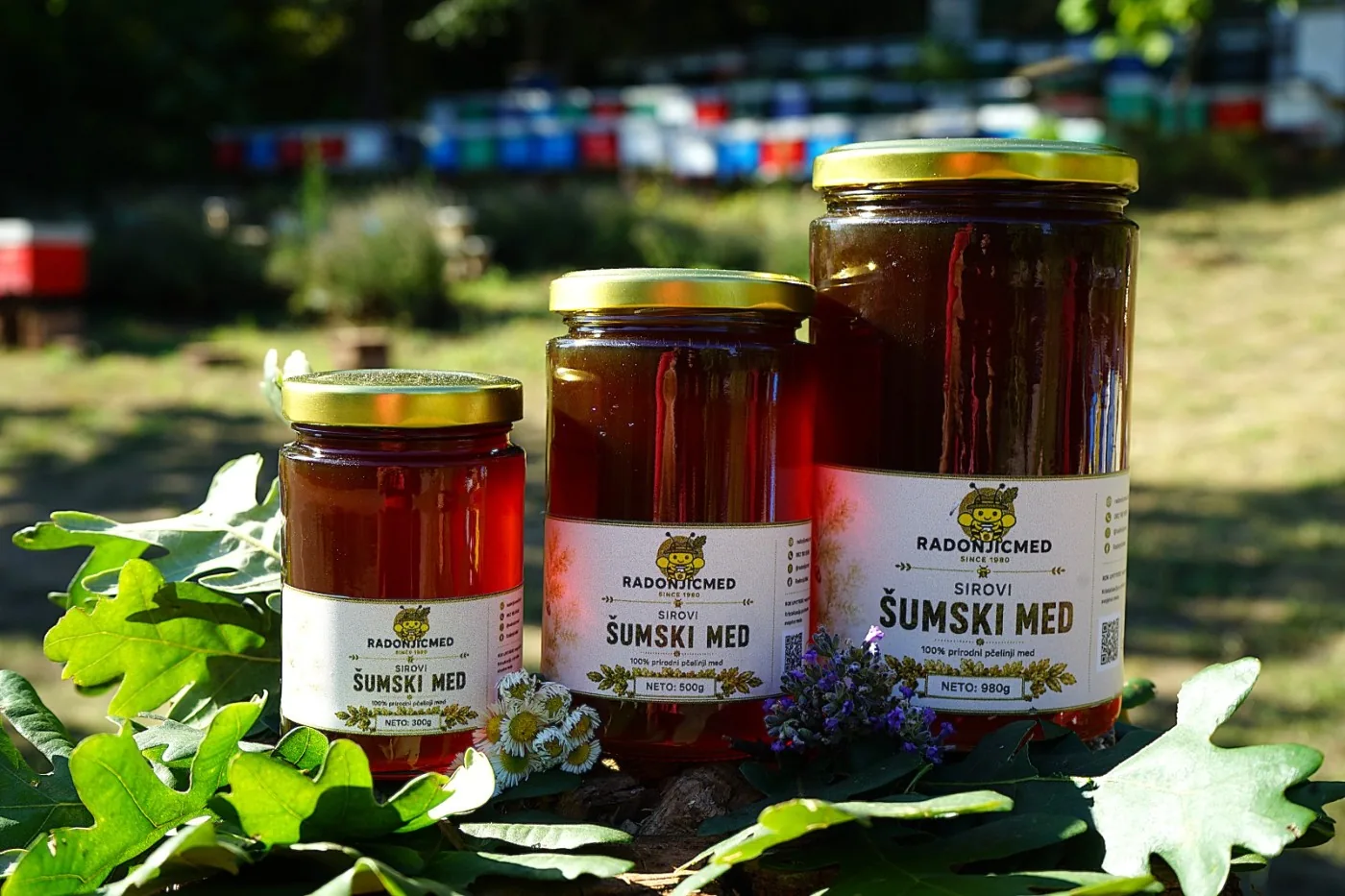
The first time someone tastes a spoonful of forest honey the reaction is almost always the same: this is not as sweet as honey. And that is in fact an accurate observation. Honeydew honey is less sweet than blossom honey, darker and denser, with a taste closer to resin and dark, caramel notes than to a flower.
The reason is that this honey does not come from blossom at all.
What honeydew is
Aphids live on oak, maple and hornbeam and feed on the sap of the tree. What they leave behind on the leaves is a sweet film, and that is honeydew. Bees collect it once the flowers are gone, in high summer, when the meadow is over.
Nectar comes from the flower. Honeydew comes from the leaf. Every other difference follows from that.
Honeydew honey differs in almost everything: colour, density, sweetness and how quickly it sets.
Why our honeydew honey sets within 3 to 6 months
How fast honey sets depends above all on how much glucose and how much of certain natural sugars it holds. Although it is widely believed that forest honey stays liquid for years, real and pure honeydew honey usually crystallises very quickly — within three to six months of extraction, without waiting for spring. That often confuses people who think dark forest honey must always stay liquid.
In real honeydew honey, the quick crystallisation and the coarser crystals are a direct consequence of its natural composition and plant origin rather than a sign that something is wrong. That is exactly what guarantees you are holding completely pure, unprocessed honey. More on this natural phenomenon in our piece on crystallisation.
The year there simply is none
This is the part that is hardest to explain to somebody looking for it in March. Honeydew depends on aphids, and aphids depend on the weather. There can be plenty two years running and then nothing for three.
In the years it fails we do not top the jar up with anything else. There is no blending with meadow honey to make the list look full. That summer there is no forest honey, and the site says so.
That is why this variety has a waiting list: you leave a contact and we write to you before we announce that it is back.
Where ours comes from
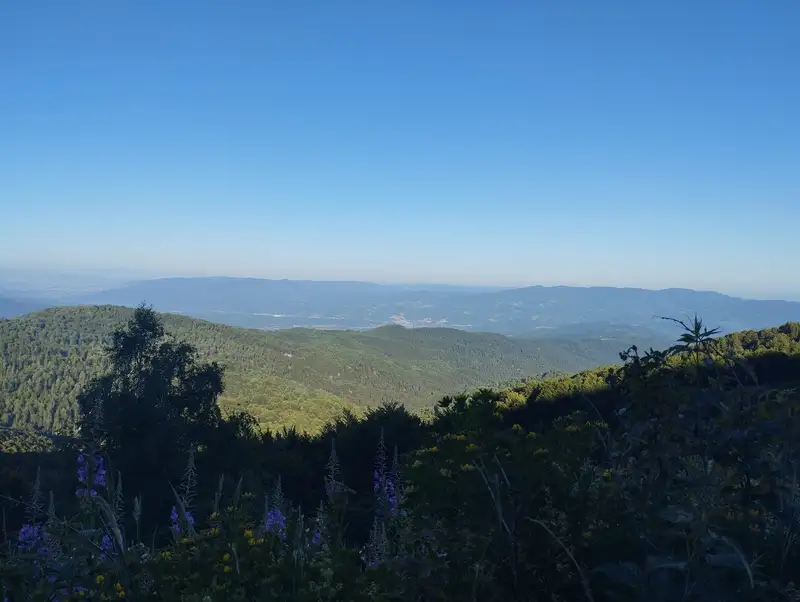
All of our forest honey comes from the oak, maple and hornbeam woods around Svođe, at around 500 metres. That is the second stop of the season, the same one the second acacia comes from in May.
Vlasina honey comes from somewhere else, the slopes of Čemernik at around 1,200 metres, where the meadow and the forest sit side by side and the bees work both blossom and honeydew in a single day. Around Svođe in July they work almost only honeydew, and the result is pure honeydew honey.
None of that is decided after extraction. It is decided by what was available on the flow that week.
What it goes with
Being less sweet and denser, it behaves differently at the table and does not suit everything.
- With mature, strong cheese and walnut. That is where it is best and where most people discover it.
- In red wine in winter.
- By the spoon, if you like dark and slightly bitter things.
What it does not suit is pancakes and sweet puddings, where its note argues with everything else. Acacia is a far better choice there, which we wrote about in which honey for what.