


How we work
Forty degrees is a ceiling, not a preference.
Honey that never goes above forty degrees makes more work for us and photographs worse. Below is why the ceiling holds anyway, and what crossing it would buy.
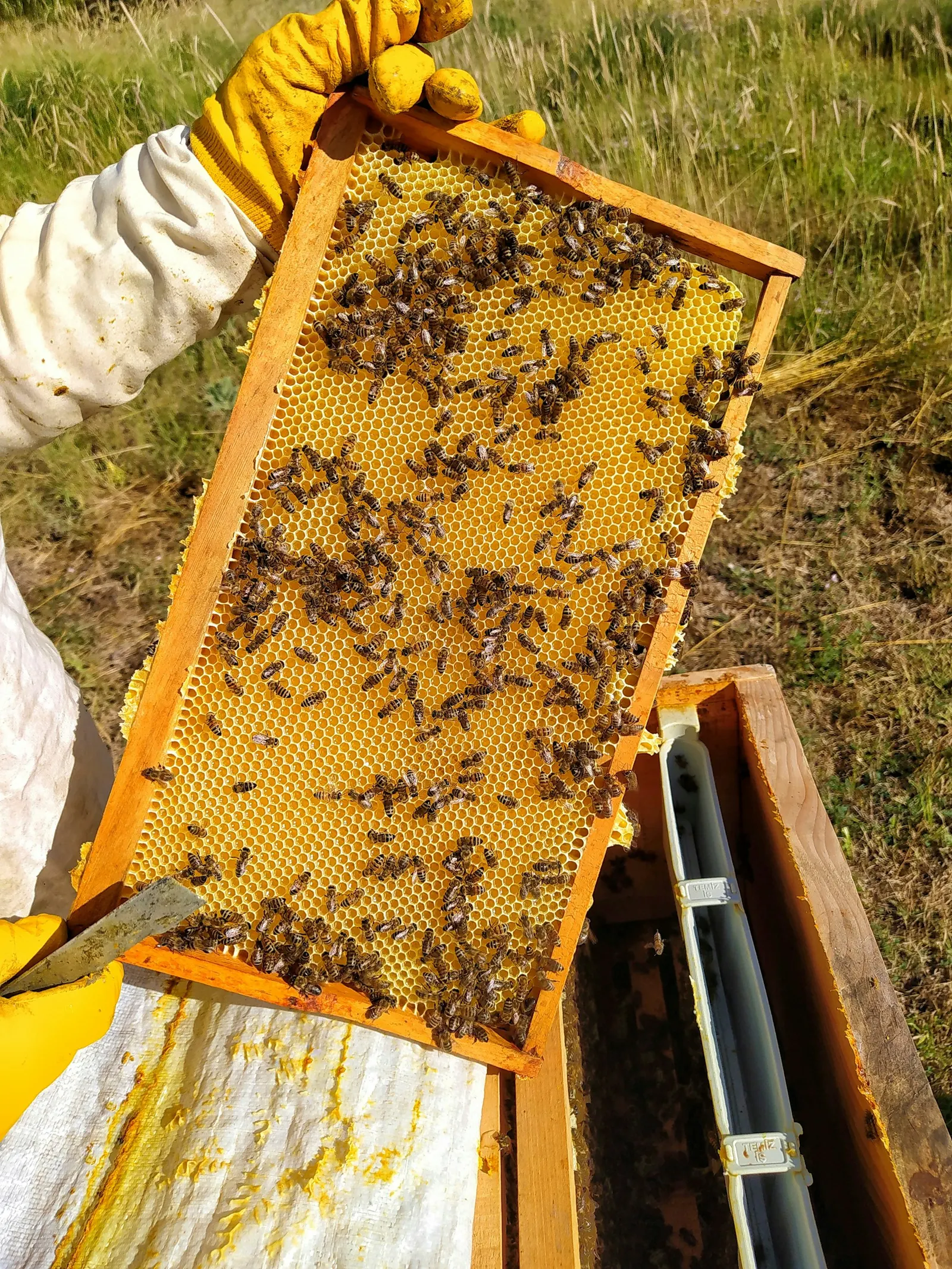
A line sits in the footer of every page on this site: never above 40 °C. It is one of the four rules we work by and probably the most expensive of them. It is worth explaining what it means, because it reads easily as a marketing phrase.
Where honey gets warmed at all
Honey can pass through heat at three points in production, and each has a practical reason behind it.
- At extraction. Warm honey leaves the comb more easily and drains faster.
- At filtering. Warmed honey passes through fine filters more readily, especially under pressure.
- At bottling. Liquid honey pours quickly and cleanly. Set honey barely pours at all.
All three reasons are real. Warming is not somebody's malice, it is a solution for work that is otherwise slow and heavy.
What gets lost
The trouble is that honey is not only sugar and water. It also holds enzymes the bee added and aromatic compounds that make the difference between acacia and Vlasina. Heat works on that part, not on the sugar.
What warming damages first in honey is exactly what makes raw honey different. And that difference is the main reason honey is bought straight from the beekeeper.
After heavy warming honey is still honey. It is sweet, it is thick, it looks perfectly clear. But it is closer to what can be bought anywhere than to what left a hive at 1,200 metres.
Why forty in particular
Forty degrees is roughly what honey already experiences inside a hive over summer. Below that ceiling it stays in conditions it knows. Above it, it enters something that does not happen to it in nature.
That is why the ceiling is the same for us and in your kitchen. When you bring a set jar back to liquid the same rule applies: warm water up to forty degrees, no microwave and no hob. More detail in the piece on crystallisation.
What that means for the jar that reaches you
This is the consequence worth saying in advance, because it can take people by surprise.
A jar can arrive already set, particularly in winter and particularly if it is Vlasina honey. Warming would fix that easily and the jar would look better on a shelf. We do not do it.