


At home
Time does not bother honey. Water does.
Honey is one of the few things in a kitchen you do not have to rescue from time. There is one mistake that genuinely harms it, though, and almost everybody makes it with the same spoon.
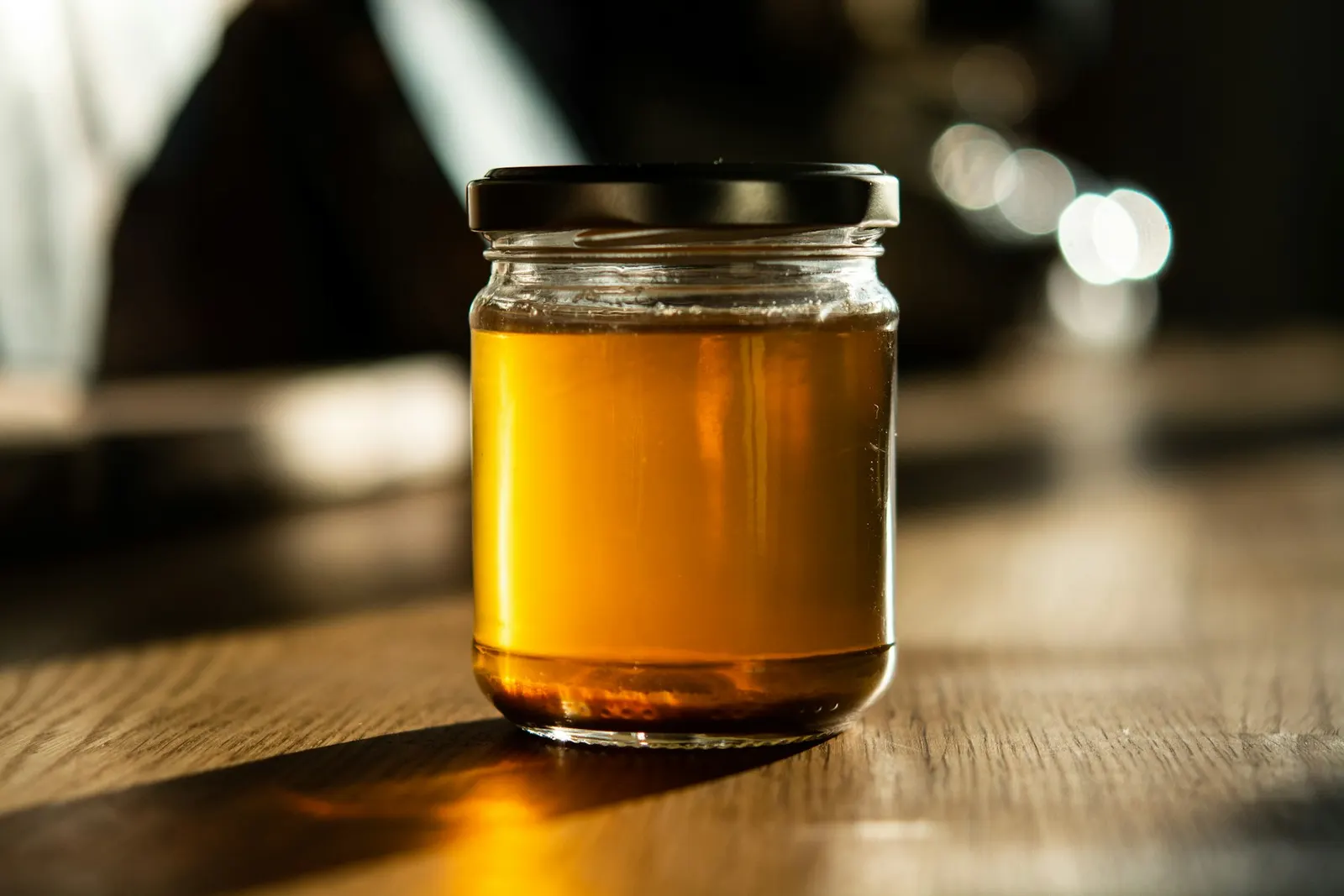
The storage question usually follows the one about honey going solid. People want to know where the jar should sit, how long it can sit there and whether it belongs in the fridge. The answer is short, so here it is first, with the reasoning after.
- A closed jar.
- Room temperature.
- Out of direct sun.
- Not in the fridge.
- Always a dry spoon.
Why honey does not spoil in the first place
There is too little water in honey for anything to grow in it, so it does not spoil the way other food does. A closed jar, kept sensibly, lasts for years.
What changes is the colour and the thickness. That is ageing.
Over time honey darkens and sets. Darker honey after two years is not spoiled honey, it is older honey.
The one mistake that really does harm
Now for the reason this piece exists. Honey in a jar is stable for as long as it stays dry. The moment water gets into it, the story changes.
A wet spoon, one you have just washed or taken out of your tea, leaves a thin layer of diluted honey on the surface. That layer no longer has the concentration that protects honey. If the jar then stands for months, fermentation can start right there at the top. You notice it by a sour smell and small bubbles.
That does not happen because the honey was poor. It happens because water got in. A dry spoon removes the whole problem, and it is the only habit around honey that is genuinely worth keeping.
Why the fridge is not the answer
The reflex makes sense: if you want to keep something, you put it in the fridge. With honey that does not do what you think.
Crystallisation is fastest at around fourteen degrees, which sits between room and fridge temperature. A jar in the fridge sets long before the same jar on a kitchen shelf, and it has gained nothing in return, because it never needed rescuing.
If set honey does not bother you, it does not matter where the jar stands. If it does, room temperature is what keeps it liquid longest. More on the process itself in the piece on why honey crystallises.
Sun and heat
Direct sun on a jar is the one source of heat genuinely worth avoiding. Glass on a windowsill gets hotter in summer than you would guess, and the ceiling honey should not cross is forty degrees. That same ceiling applies at our end during extraction and bottling, so there is no sense in crossing it on a windowsill.
A kitchen shelf, a larder, an ordinary cupboard: all of them are fine. Honey asks for nothing in particular beyond being left alone.