

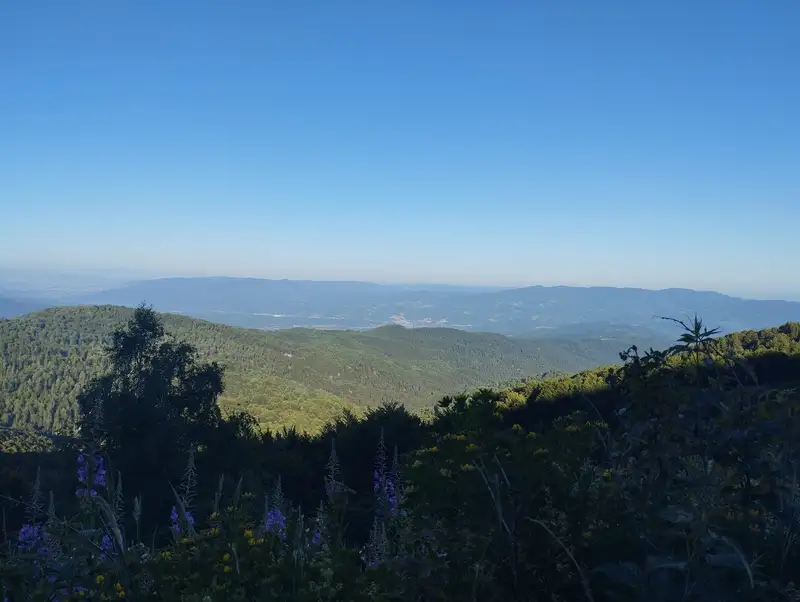
Up the Vlasina · from Vlasotince to Čemernik
The hives go upstream.
All three stops lie along the same river, each one higher. Vlasotince at the bottom, Svođe in the middle, the slopes of Čemernik at the top. That difference in altitude is why a single season yields three different honeys.
- ~270 mVlasotinceFirst acacia · late April
- ~500 mSvođeSecond acacia and honeydew · May and July
- ~1 200 mSlopes of ČemernikVlasina · June–August
Where
One river, three altitudes.
Vlasotince, Svođe and the Vlasina slopes sit along the same watercourse, one above the other. The move follows the water upstream, and with every climb the bloom runs later and the air gets colder.
How high
Drag the slider through the altitudes.
Nearly a kilometre between the first stop and the last changes which plants grow at all, when they flower, how cold the nights are and which honey ends up in the jar.
m
Vlasotince
- Flowers
- —
- At night
- —
- Honey
- —
Why we move
Why the hives go uphill.
Acacia flowers for ten days in one place, and two hundred and thirty metres higher the same blossom opens a fortnight later. Moving joins those two windows together, so a flow that would last a week and a half runs for nearly a month. The whole routine is described in the note on moving the hives.
- A short windowAcacia flowers for ten days. Rain in the wrong week and we skip that stop for the year.
- Slower nectarCold nights up top stop the flow. In the morning you wait for it to warm.
- Moving at nightYou only set off once the last bee is back, or that group stays behind at the old site.
- Less yield up highThe same hive on the Vlasina slopes gives markedly fewer kilograms than down below.
What grows
What grows at which altitude.
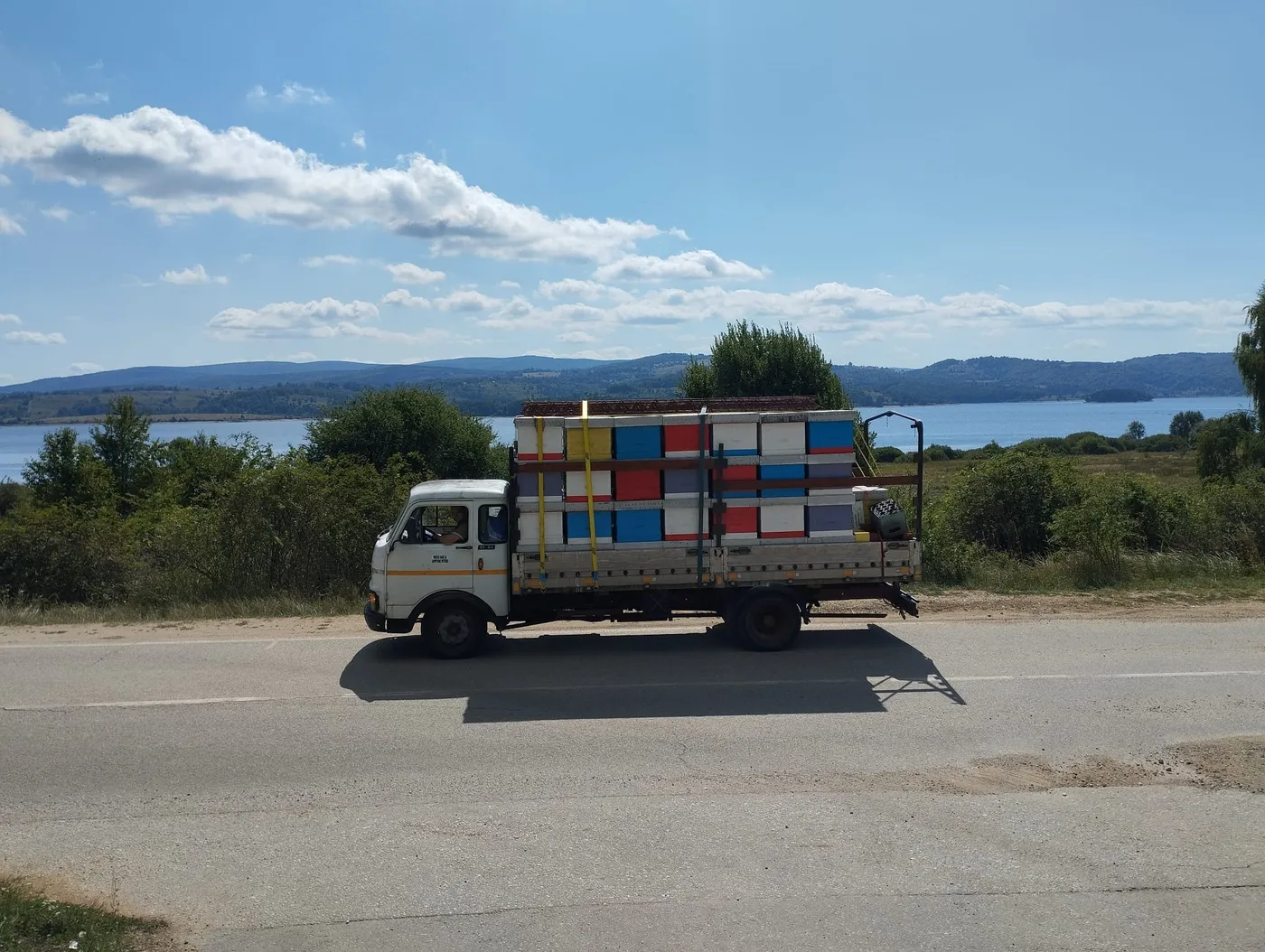
How the move works
We move at night.
Hives are loaded when every bee is inside, which means before first light. The entrances are closed only once the last one is back, because a group left behind at the old site is lost.
Two moves a season: Vlasotince to Svođe in mid May, then Svođe to the Vlasina slopes in early June. They come back down only in autumn, at wintering.
Fog up there can come down in ten minutes, and when it does the work stops, because the way back is no longer visible.
What it costs them
What one season takes.
With three separate extractions and two moves a year, the yield per hive is lower than it would be from an apiary that stays put, and that is what shows up in the price of a jar.