

A year on the mountain
A year at the apiary.
The order of the work repeats every season, give or take a week or two depending on how the spring turns out.
Loading the season…
Twelve months
From the first inspection to wintering.
- 01
January
Nothing is opened. You listen for the cluster humming and clear snow off the entrance.
- 02
February
First warm day, the bees come out for a cleansing flight. We count who survived.
- 03
March
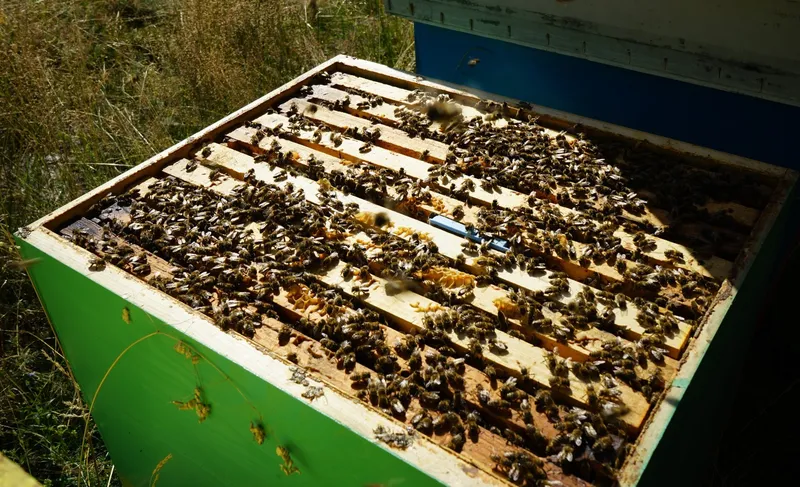
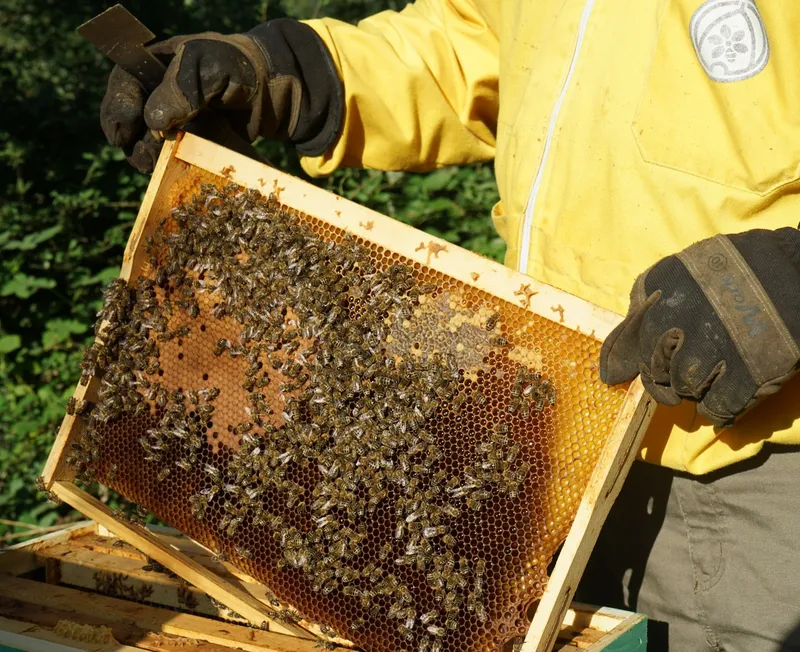
The first real inspection. Queen, stores and any sign of disease.
- 04
April
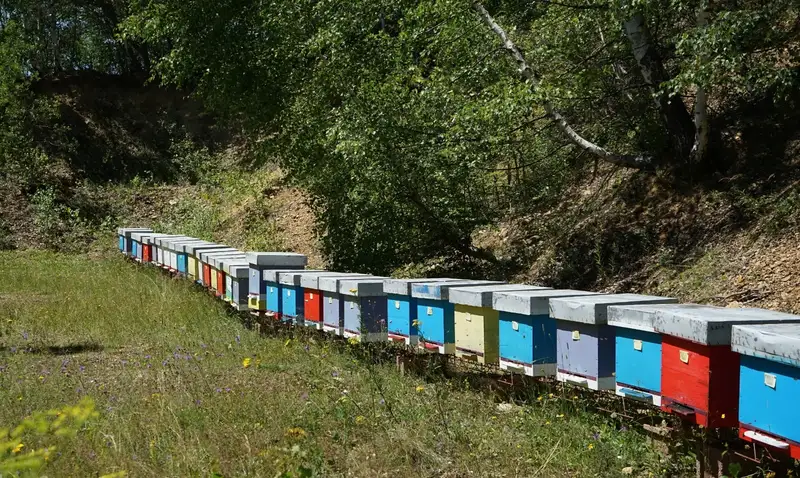
The brood nest is opened up. At the end of the month the hives go out to Vlasotince for the first acacia.
- 05
May
Acacia twice: extraction at Vlasotince, then the move to Svođe.
- 06
June
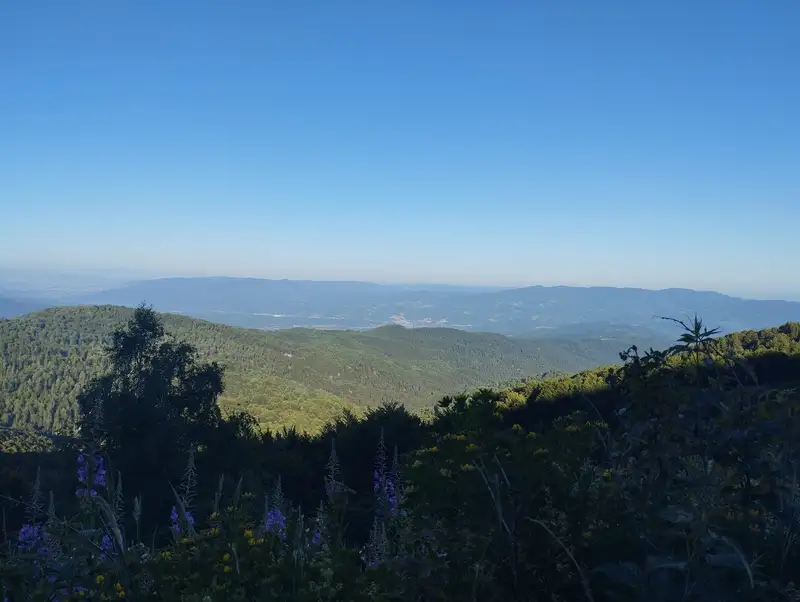
The move to the slopes of Čemernik. Watching for swarming, second acacia extraction.
- 07
July
Oak and maple honeydew, if there is any. Forest honey is extracted.
- 08
August
The Vlasina flow runs out. The last extraction of the year.
- 09
September
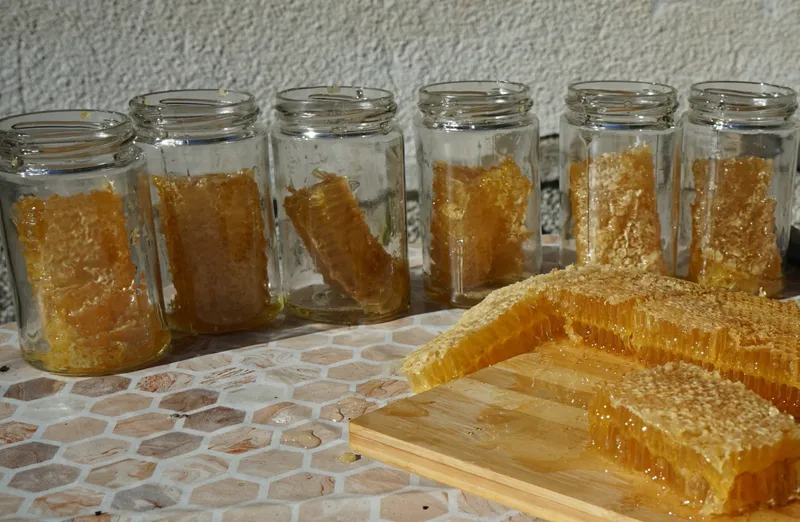
Coming down off the mountain. Fresh Vlasina honey goes on sale.
- 10
October
Weak colonies united, varroa treatment, winter stores checked.
- 11
November
Wintering down. Entrances narrowed, mouse guards on.
- 12
December
Repairing frames and rendering wax. You go to the apiary only to look.
Extraction
Five steps of extraction.
The supers come off as soon as a flow ends, and each one is extracted on its own. What stays in the jar is only what the bees brought in over that period.
- 01
Wait for the cap
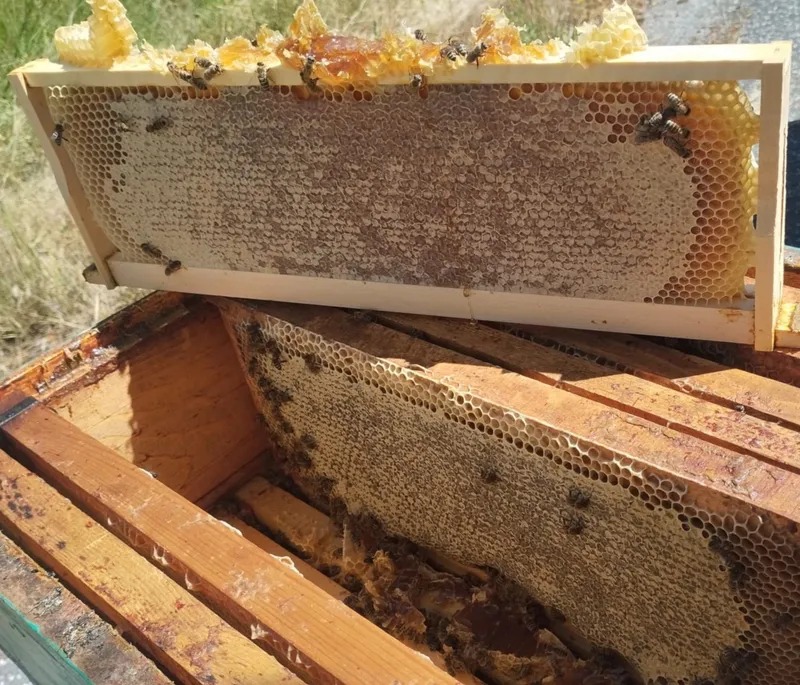
A frame is extracted once the bees have capped the cells with wax, because by then there is little enough water in the honey for it to keep.
- 02
Lifting frames
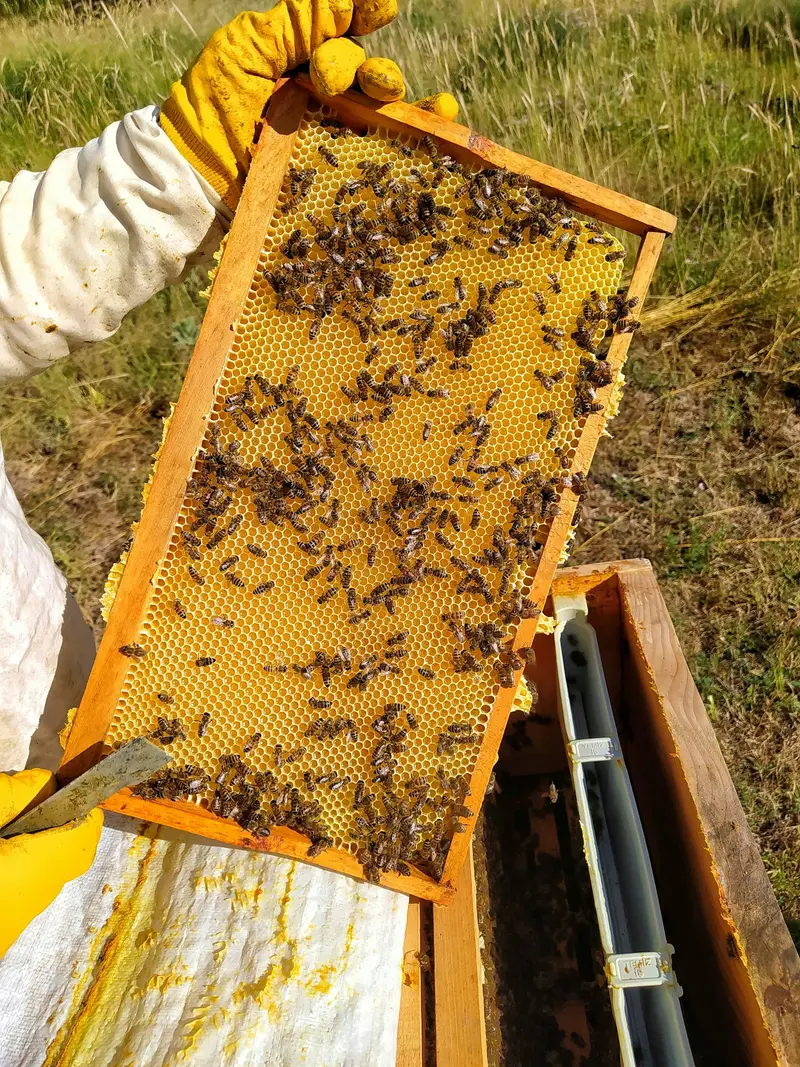
Frames come off in the morning, while it is cooler. Bees brushed off, smoke used as little as possible.
- 03
Uncapping
Wax taken off with a knife, by hand, frame by frame. The cappings are rendered separately and go back into frames.
- 04
Centrifuge
An electric extractor empties the cells evenly, so the comb stays whole and goes back to the bees.
- 05
Settling
Through a coarse sieve, then a few days to settle on its own. There is no pump and no pressure, so the pollen stays in.
What we never do.
- We do not heat above 40 °C
- We do not filter under pressure
- We do not feed syrup during the flow
- We do not blend two flows into one jar
- We do not buy other people’s honey to fill a season