

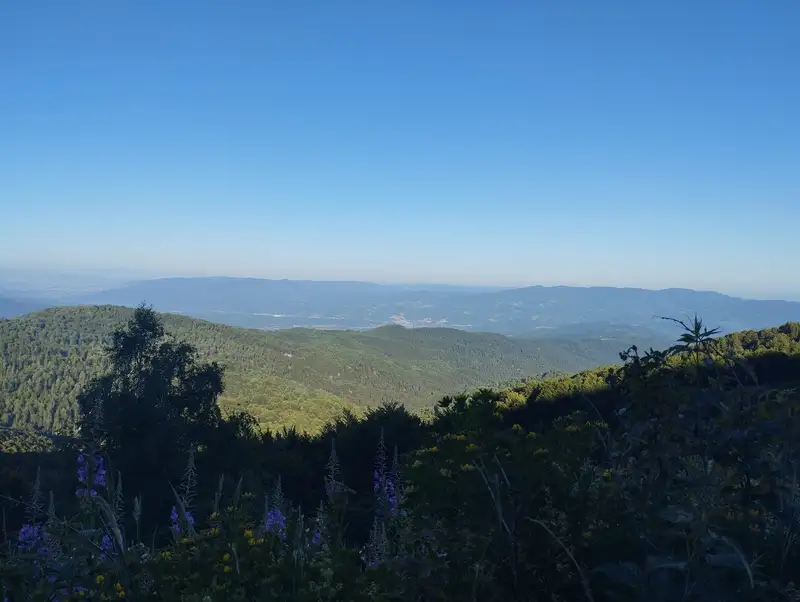
You can taste the altitude
Why is honey from 1,200 m above sea level different?
Mountain honey and lowland honey differ not because one is better, but because they came from different blossom, at a different time, under different nights.
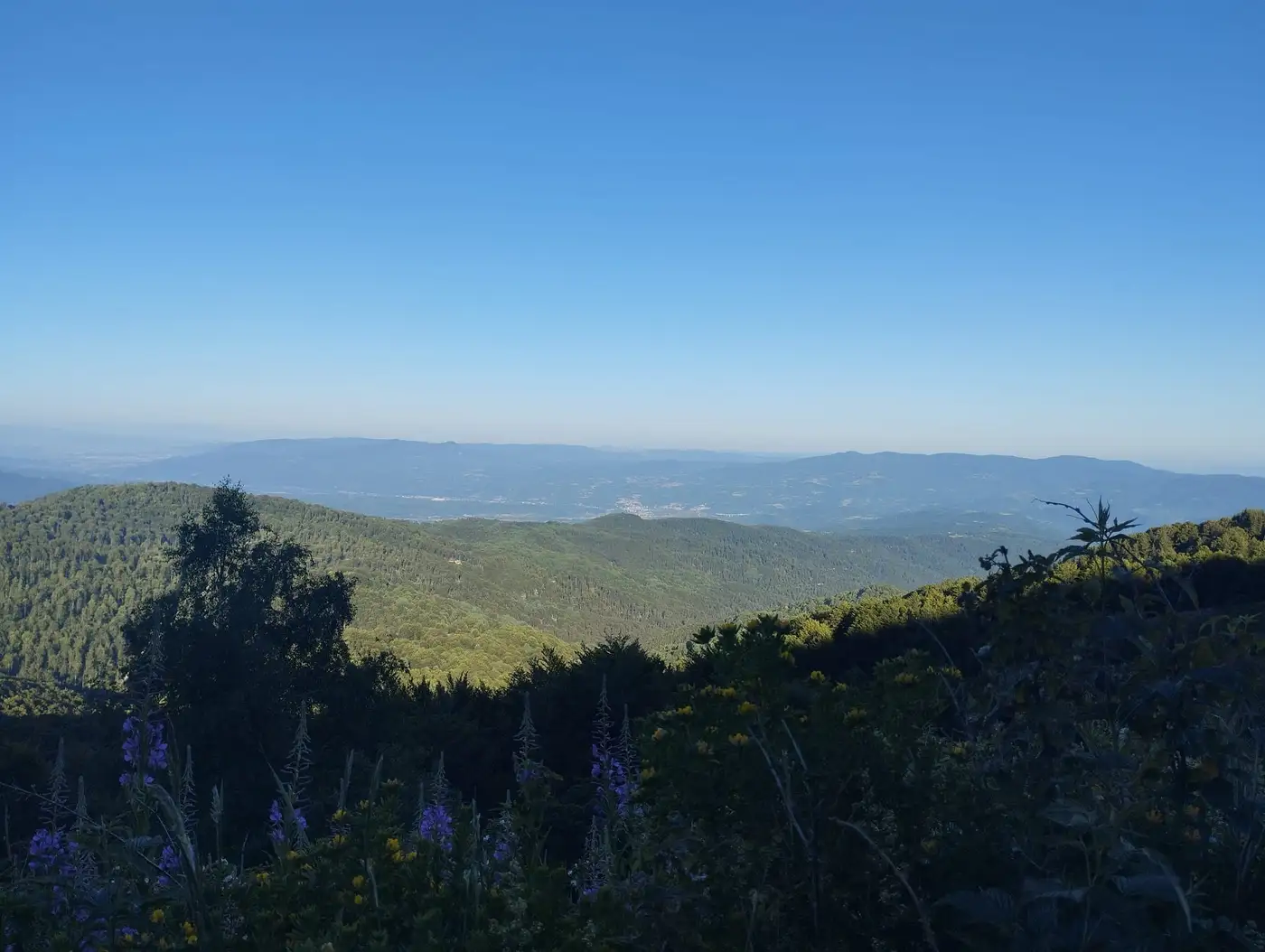
Mountain honey is almost always asked for in those words: something from the mountain, something that is not from a supermarket. Underneath sits an assumption that altitude means something in itself.
It is worth setting out what actually changes with height, because it is not about the number of metres.
Different blossom, not the same blossom higher up
The first difference is the obvious one: what grows at 1,200 metres is not what grows at two hundred and seventy. Our lower stops, Vlasotince and Svođe, give acacia. The slopes of Čemernik give meadow flowers, while the honeydew for the forest honey comes lower down, from oak and maple around Svođe.
That is why no acacia honey comes from that altitude, and Vlasina does, along with forest honey in some years. Those varieties simply do not exist lower down.
The same plant, later
The second difference is timing. The same blossom runs late higher up. For acacia the gap between two hundred and seventy and five hundred metres is about a fortnight, and our whole move of the hives is built on it.
The mountain does not offer a different calendar. It offers the same calendar, shifted back.
Colder nights, a slower season
The third difference is one the buyer never sees and the beekeeper feels in kilograms. At 1,200 metres the nights are colder, the season shorter and there are fewer days on which bees can fly at all.
The same hive up there gives noticeably less honey than down below. On top of that it takes the most work, being furthest away and hardest to reach. That is one of the main reasons mountain honey costs more than lowland honey, and why it costs more than supermarket honey in the first place.
What of that reaches the jar
All of it reaches the taste, though not in the way it is usually presented. There is nothing mystical about it.
- Colour. Honey from altitude is generally darker, because meadow flowers and honeydew give a darker honey than acacia.
- Sweetness. Less sweet than acacia, with a fuller and longer finish.
- Density. Thicker, particularly when it carries a share of honeydew.
- Variation year to year. The ratio of meadow to honeydew depends on the summer, so one jar does not match the last.
That last point is mentioned least and says the most: honey from one place and one altitude is not a standardised product, and you should not expect it to be identical every year.
Is mountain honey better
Not automatically better, but different.
Acacia honey from the lowest stops is the palest we have, the mildest and the slowest to set. For tea, and for anyone who dislikes strong flavours, it is a better choice than anything from 1,200 metres. There is more on that in which honey for what.
What the mountain gives is not quality in itself, but varieties that exist nowhere else and a season that cannot be hurried.